
G-Control and sensors
Control for more than greenhouses.
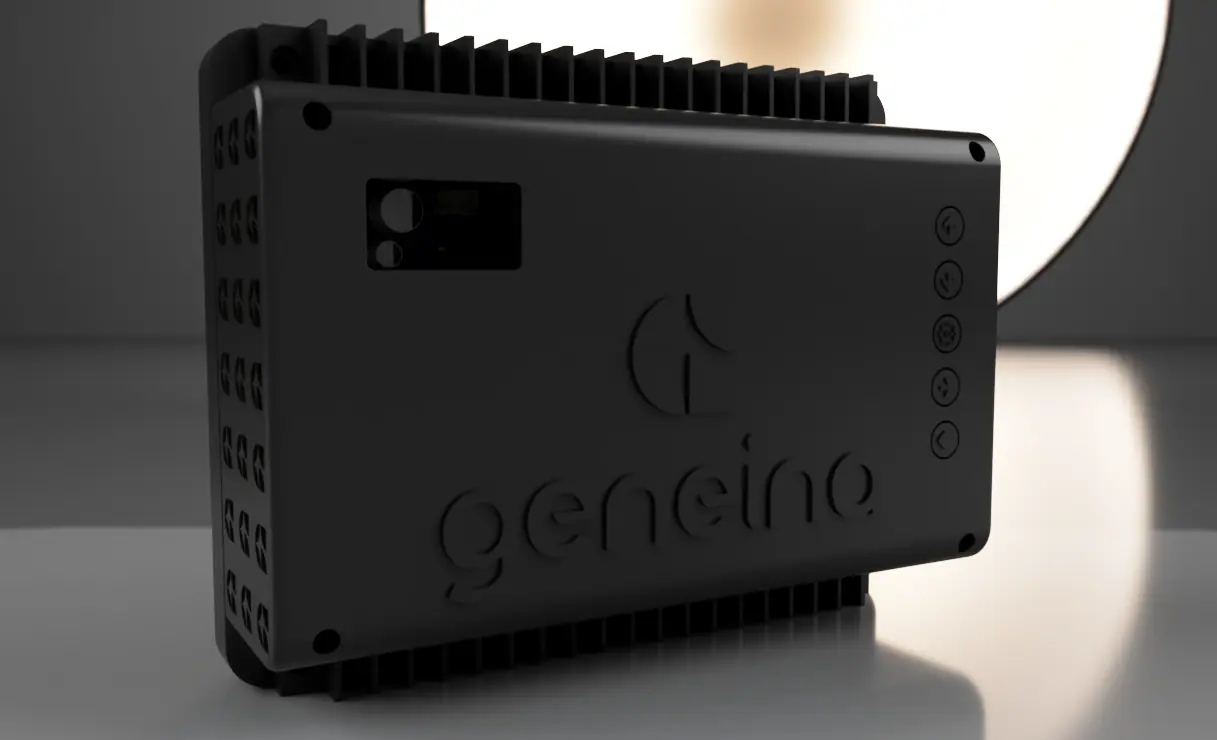
G-Control supports greenhouses and, by configuration, nurseries, open fields, poultry houses, fish farms and cold rooms. The controls available depend on the operation; cold rooms use temperature monitoring only.
How it controls
You set the targets. G-Control works to them.
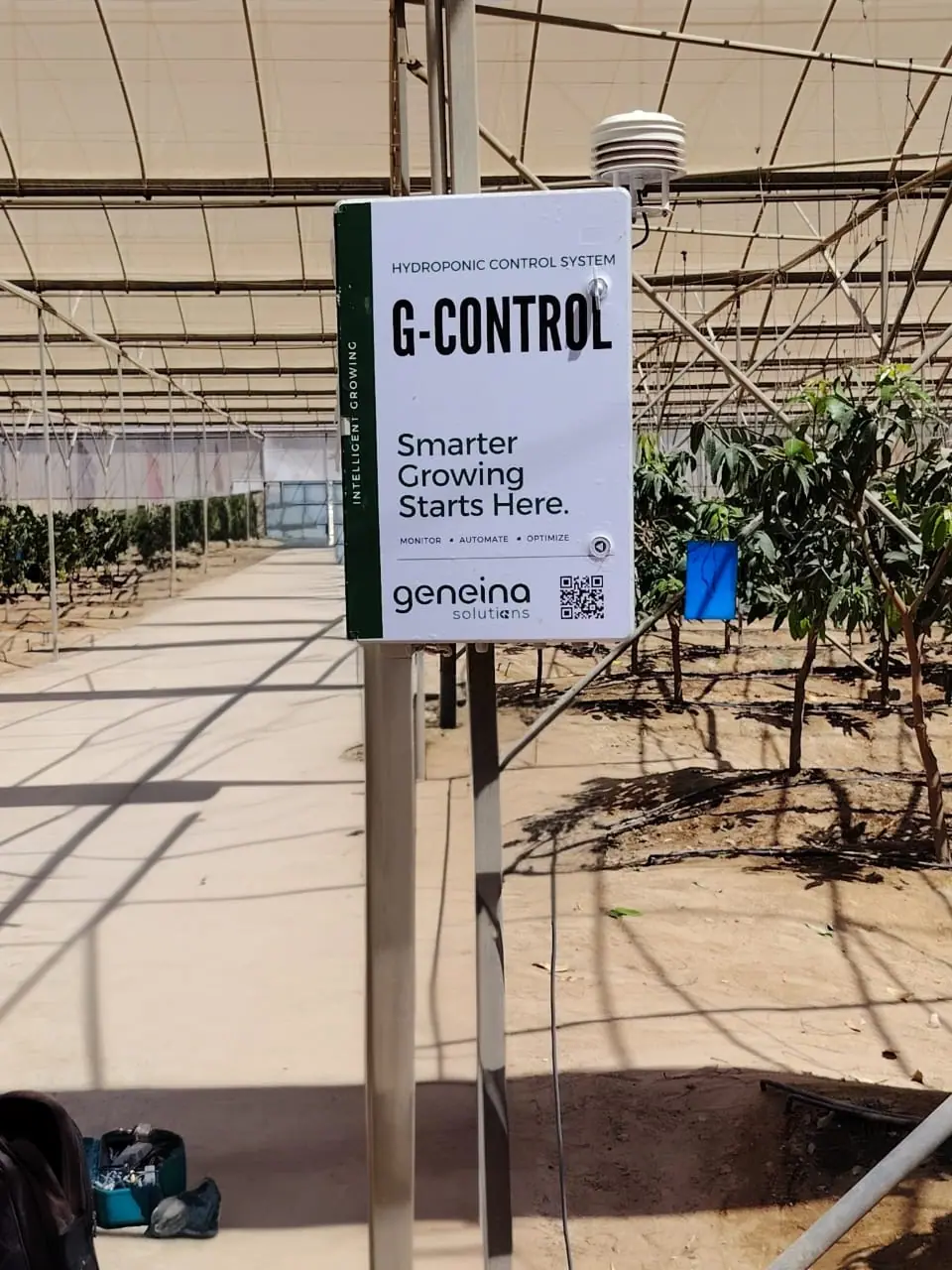
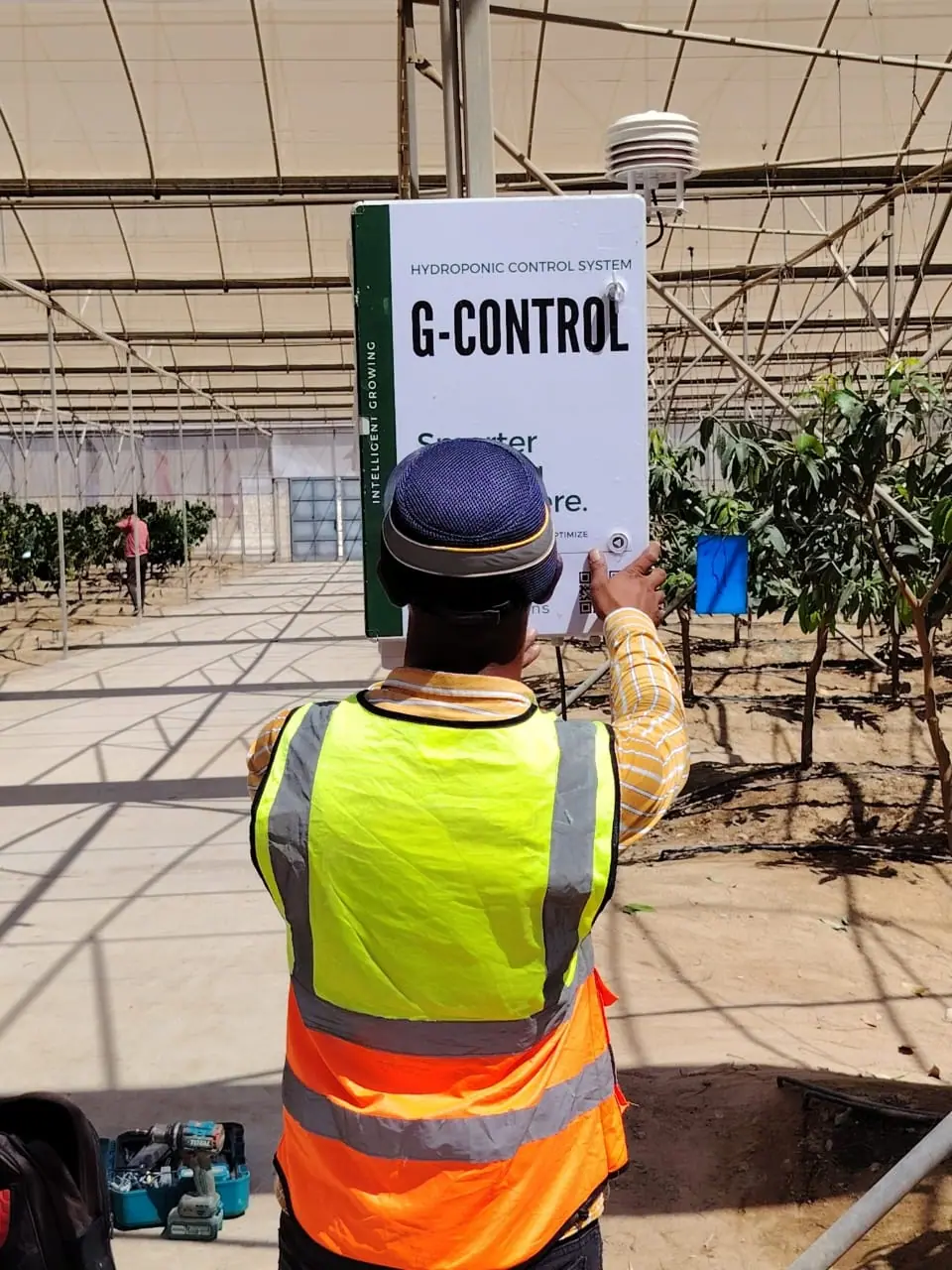
Each G-Control controls one climate zone or area. Tell us how many zones you have so we can plan the setup.
G-Control keeps running if the internet connection drops, while power remains on.
- Temperature and humidity. Separate day and night targets and maximums for each.
- The clock. You set the sunrise and sunset hours. Day and night targets switch on that schedule.
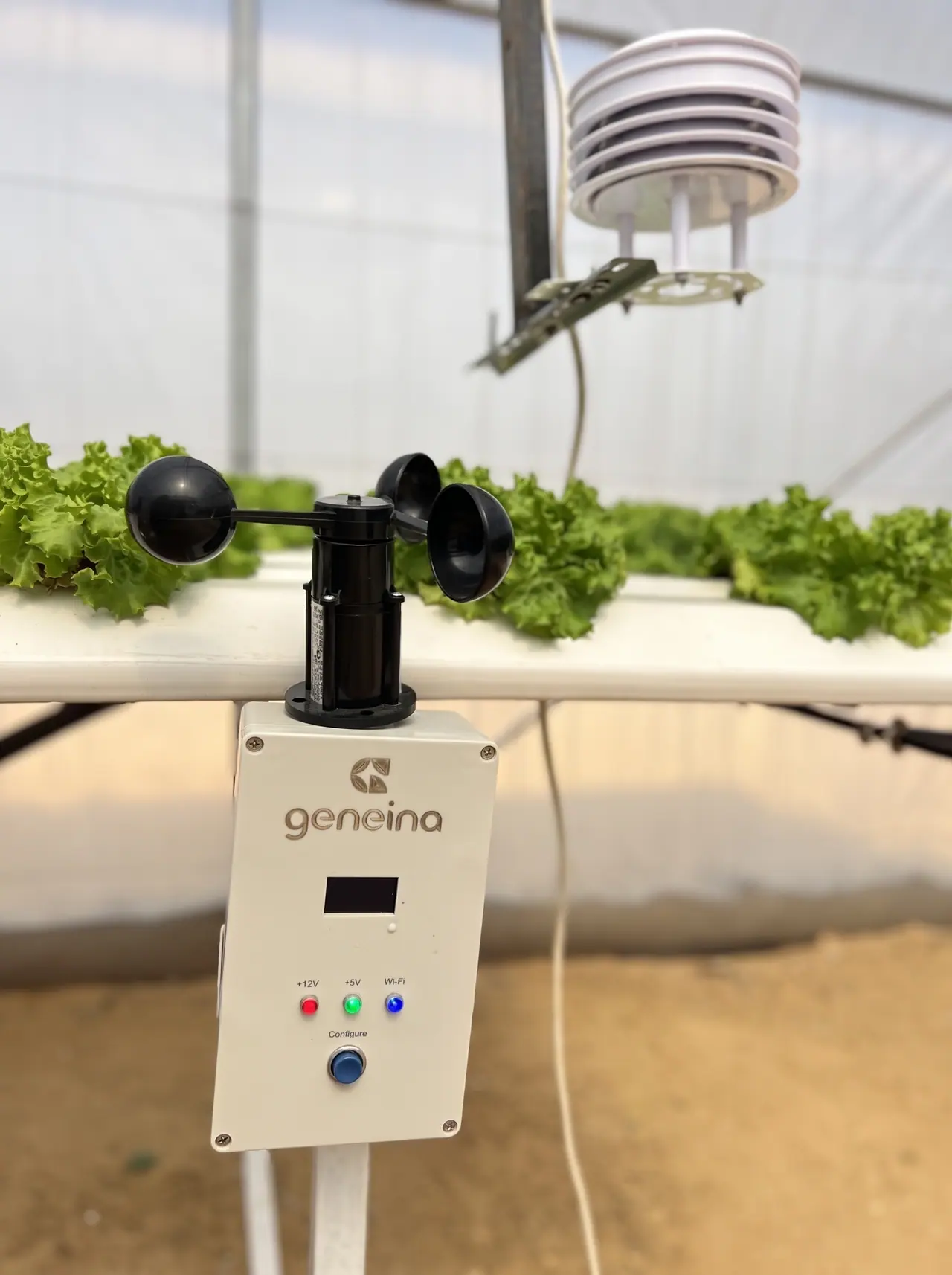
- Wind. When wind passes the limit you set, G-Control moves vents to a safe position and raises an alert. A wind-speed sensor is required.
- Irrigation. Valves and pumps on a day and night on/off timer.
- Fans and cooling-pad pump. Fans ramp. The cooling-pad pump uses temperature and humidity targets. It stops when humidity rises above its target.
Attachments
| Attachment | What it adds |
|---|---|
| Climate Monitor | Temperature, humidity, CO₂, atmospheric pressure and light, inside or outside the house |
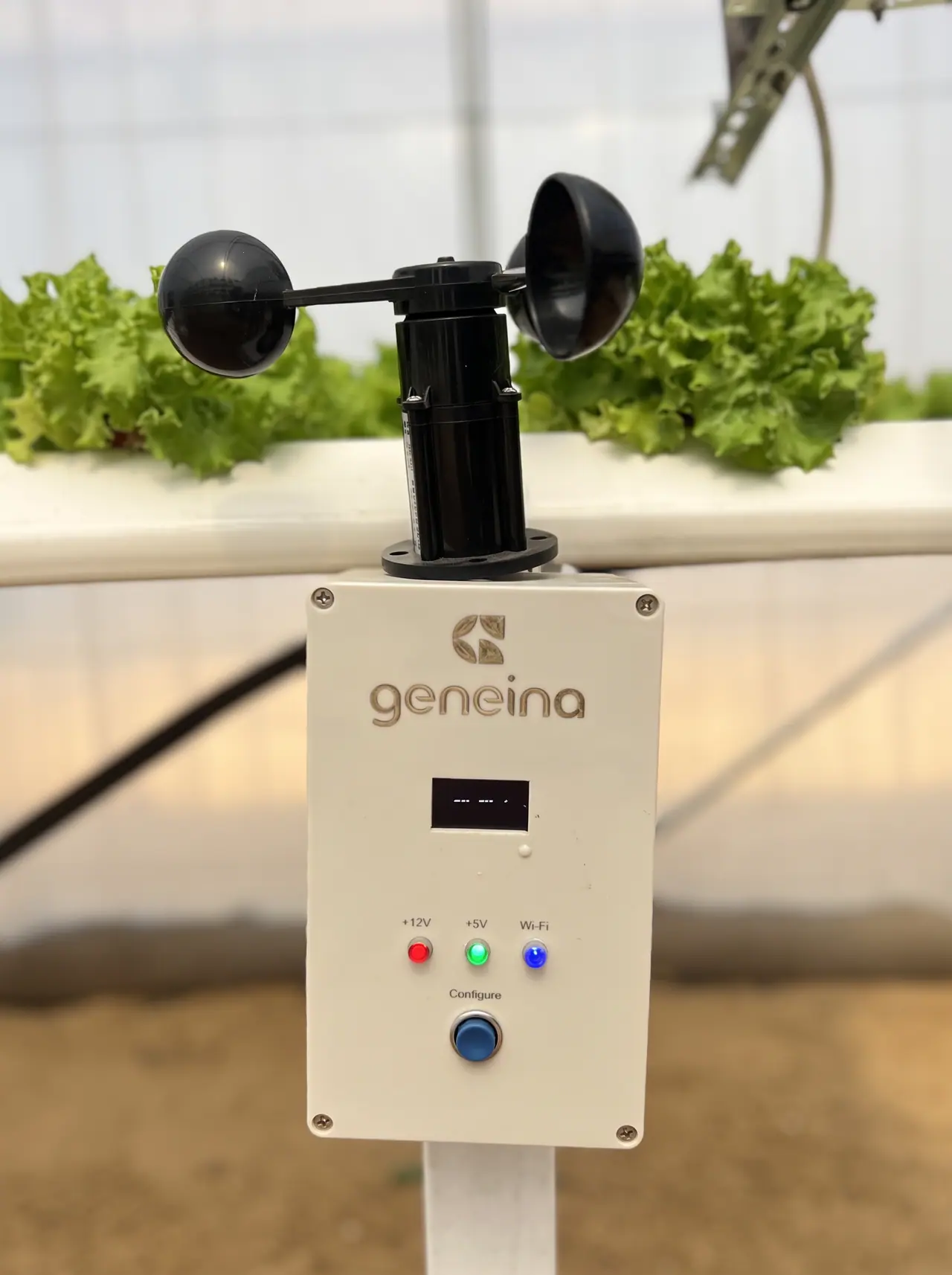
| Wind-speed sensor | Wind speed, for the wind failsafe |
| Output expansion | 4 additional control outputs per module |
Irrigation is built in. There is one G-Control; it controls irrigation as well as climate.
Choose sensor-based control or timers for each job. Sensor-based control requires a suitable sensor for that job.
Controller specification
| Parameter | Specification |
|---|---|
| Control outputs | 4 control outputs as standard; expandable in steps of 4 to 16. External relays or SSRs are supplied separately. |
| Field buses | 2 × independent RS-485 Modbus RTU |
| Fan speed | Variable-speed fan control |
| Cloud connection | Wi-Fi to GeneinaOS, MQTTS and HTTPS |
Sensors
Climate Monitor, sold separately. It reads temperature, humidity, CO₂, atmospheric pressure and light over RS-485 Modbus RTU.
A wind-speed sensor is an add-on, for the G-Control wind failsafe or the standalone Climate Monitor. Price on request.
The Climate Monitor also works on its own, without a G-Control: the standalone Climate Monitor.
More: Sensors
Physical systems. Connected software.
GeneinaOS connects the software side of your operation. Plan crops, organise work and view supported sensor readings. We confirm the software plan and device connections for your setup.
GeneinaOS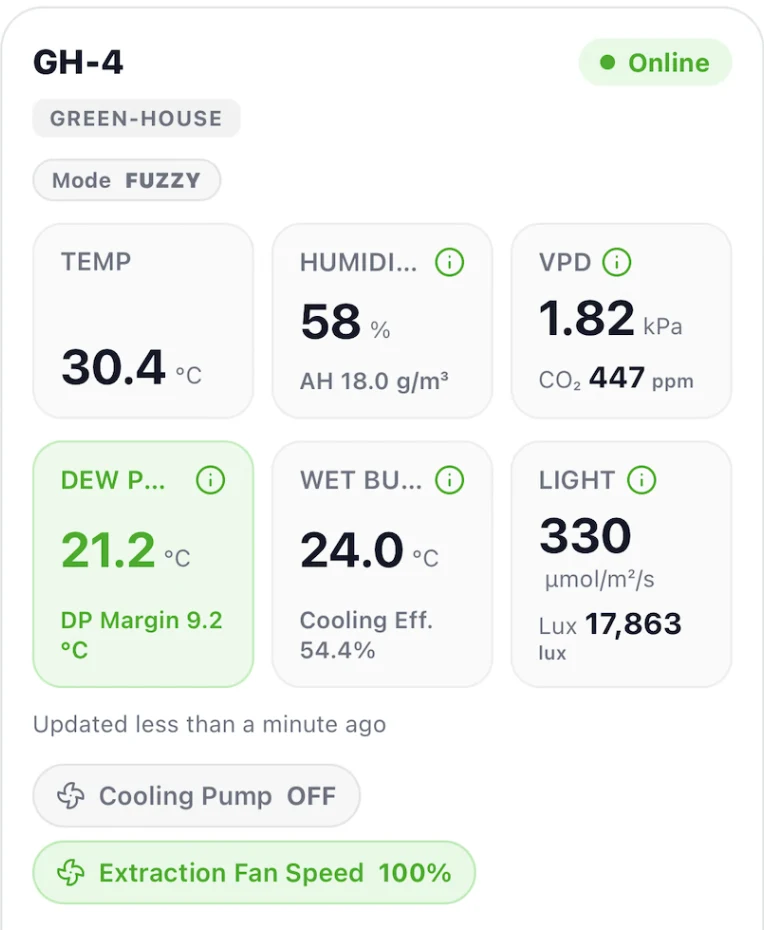
G-Control and its sensors require an active GeneinaOS subscription, priced separately. The hardware senses and acts; you monitor it in GeneinaOS. geneinaos.com
Buy outright, or rent
Buy it outright, or rent it monthly. Ask us to quote both.
Our prices assume the site already has power, water and a structure. Where it does not, we deliver the full scope with our partner OPT-TEC Solar: all design, supply and construction work (EPC), and solar power where the site needs it.
Greenhouses, nurseries, open fields, poultry, fish farms and cold rooms
- Greenhouses: supported.
- Open field: supported with an enclosure built on site.
- Nurseries: by configuration.
- Poultry houses: the fans on a speed drive and the cooling-pad pump run to your day and night targets. The foggers and the heaters run to their own targets. The lights run on a daily schedule. G-Control does not replace your backup alarm or generator.
- Fish farms: the aerators and the pumps run on a day and night schedule.
- Cold rooms: we monitor the temperature. G-Control does not run the refrigeration.
- Something else: ask us. We will tell you what G-Control does today and what it does not.
Build your setup
Plan one climate zone at a time. Each G-Control controls one zone or area. Choose a standard setup, adjust it, then ask us for a quote.
Build your setupQuestions before you choose
Can one G-Control run several climate zones?
Each G-Control controls one climate zone or area. Tell us how many zones you have so we can plan the setup.
Does it keep working if the internet drops?
Yes. G-Control keeps running while power remains on.
How many control outputs can I have?
G-Control starts with 4 control outputs. We can add outputs in groups of 4, up to 16 in total. Tell us which equipment you want to control so we can plan the connections.
Are the relays included?
No. External relays or SSRs are supplied separately. You can supply them, or ask Geneina Solutions to supply them through our partner OPT-TEC Solar.
Do I need a GeneinaOS subscription?
Yes. G-Control and its sensors require an active GeneinaOS subscription, priced separately.
What does wind protection do?
When wind passes the limit you set, G-Control moves vents to a safe position and raises an alert. A wind-speed sensor is required.
How do G-Control and in-house sensors differ from satellite or weather apps?
Satellite images and weather apps cannot see through greenhouse covers or switch equipment. Our sensors measure temperature, humidity, CO₂, light and root-zone conditions inside the house, and G-Control switches fans, vents, cooling pads, shade screens and irrigation valves to your targets, even if the internet connection drops.
Can G-Control run open-field irrigation, poultry houses, fish farms or cold rooms?
Yes, by configuration. G-Control supports greenhouses, nurseries, open-field irrigation with an enclosure built on site, poultry-house ventilation, cooling, fogging, heating and lighting schedules, fish-farm aerator and pump schedules, and cold-room temperature monitoring.
Request a quote. Tell us what you want to control, the sensors you need and any equipment you already have.